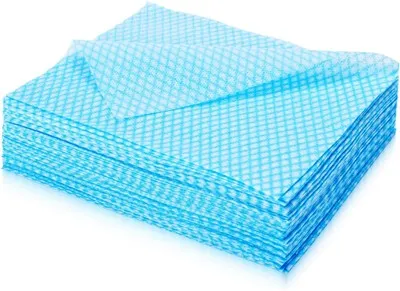
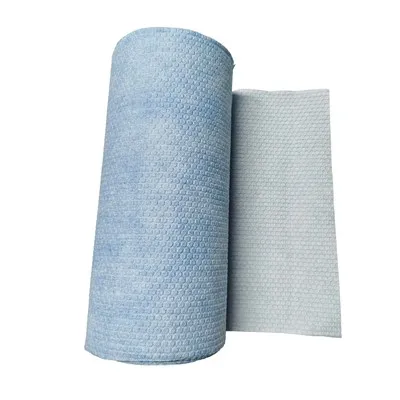
The application of non-woven fabrics in the agricultural field has always been relatively extensive, because of its good shading, air permeability, and degradability has always been a kind of product that assists crop growth that the majority of farmers have always liked. However, now that the agricultural market is more selective and the market is more competitive, will the agricultural non-woven market still have a big development scenario? Next, let's take a look. The introduction of non-woven technology in my country has not been long, and non-woven fabrics will be widely used in the development of off-season vegetable cultivation.
Non-woven fabrics have been widely used in developed countries such as Japan, the United States, the Netherlands, and Canada. The management is convenient, and it is expected to realize mechanized or semi-mechanized uncovering.
According to research, non-woven fabrics used to cover greenhouses have better thermal insulation effect than straw curtains and are lighter than straw curtains. Multi-layer coverage in greenhouses and greenhouses together with agricultural film. Such non-woven fabrics for greenhouses are also suitable for shade seedling cultivation and cultivation in summer and autumn. Thickened non-woven fabrics (100-200 g/m²) replace straw curtains and straw thatch. It is generally used as a thermal insulation screen in large sheds and greenhouses, and can also replace the straw curtain cover to cover the small sheds to strengthen the thermal insulation effect. 40-50g/m² non-woven fabric for greenhouses has low water permeability, high shading rate and heavier quality. It can also be used in open-field small arch sheds, large sheds, and greenhouses to keep warm at night, which can increase the temperature by 0.7-3.0°C. Generally, the thin non-woven fabric of 20-30 g/m² has a relatively large water permeability and air permeability, and is light in weight. It can be used to cover floating surfaces in open fields, greenhouses and greenhouses. The thickness of the non-woven fabric is different, the water permeability, shading rate, and air permeability are different, and the covering method and use are also different.
Such as 20 grams of non-woven fabric per square meter, 30 grams of non-woven fabric per square meter, 40 grams of non-woven fabric per square meter and so on. Non-woven fabrics are divided into thin type, thick type and thick type, and the product name is usually expressed in grams per square meter. Agricultural non-woven fabric is a new covering material with good air permeability, moisture absorption and certain light permeability. Non-woven fabrics for agriculture include crop protection cloth, seedling raising cloth, irrigation cloth, thermal insulation curtain, etc. Its longest life span is only 90 days, and it can be decomposed within 8 years when placed indoors. It is non-toxic, odorless, and contains no leftover substances during combustion, so it does not pollute the environment, so environmental protection comes from this. It is water-repellent, breathable, flexible, non-combustible, non-toxic, non-irritating, and rich in color.
The material will decompose naturally if placed outdoors. It is a new generation of environmentally friendly materials, with good strength, breathable and waterproof, environmentally friendly, flexible, non-toxic, tasteless, and cheap. Although it is a cloth without being woven, it is called a non-woven fabric. It is made of a wet or dry papermaking machine using water or air as the suspension medium, including chemical fibers and plant fibers.