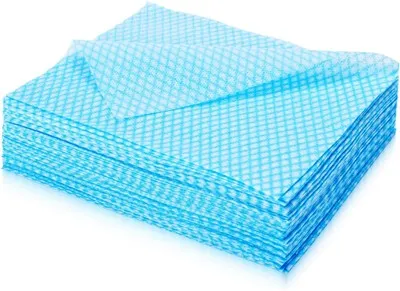
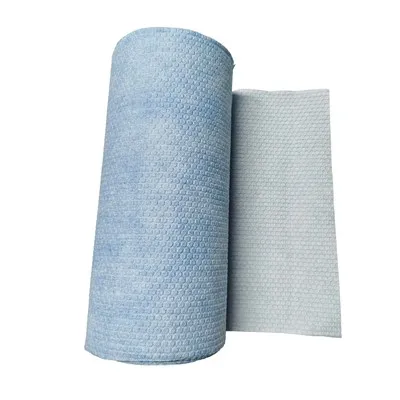
Why use non-woven fabrics?
»Durable and stylish
»More spacious
»Recyclable
"Can be reused
»Easier to use and carry
»Washing
»Available in a wide range of size and finish options
Non-woven fabrics provide specific functions such as absorption, liquid repellency, elasticity, stretchability, softness, strength, flame retardant redundancy, detergency, buffering, filtration, bacterial barrier and sterility. In combination with other materials they provide products with different characteristics of the spectrum and used alone or as parts of clothing, furniture, health care, engineering, industrial and consumer products.
It is precisely because of the wide application that many people have a question. Why does static electricity occur during the production of non-woven fabrics? The problem of static electricity during the production of non-woven fabrics is mainly caused by the low moisture content in the air when the fibers and the card clothing are in contact. , Can be divided into the following points:
(1) The weather is too dry and the humidity is not enough.
(2) When there is no oil on the fiber, there is no antistatic agent on the fiber. Because the moisture regain rate of polyester cotton is 0.3%, the lack of antistatic agent results in static electricity during production.
(3) The fiber oil content is low, and the relatively low content of electrostatic agent will also generate static electricity.
(4) SILICONE polyester cotton because of the special molecular structure of the oil agent, there is almost no moisture on the oil agent, it is relatively easy to generate static electricity during production, usually the smoothness of the hand feels in a positive ratio to the static electricity, the smoother the SILICONE cotton, the more static electricity Big.
(5) In addition to humidification in the production workshop, the method of preventing static electricity can effectively eliminate oil-free cotton during the feeding stage is also an important task.