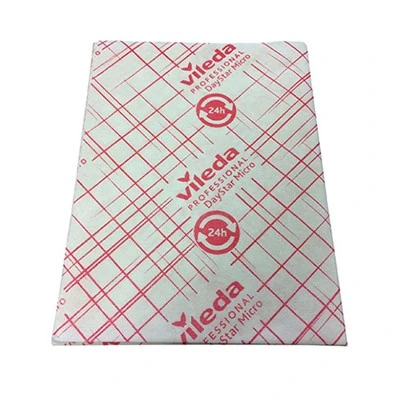
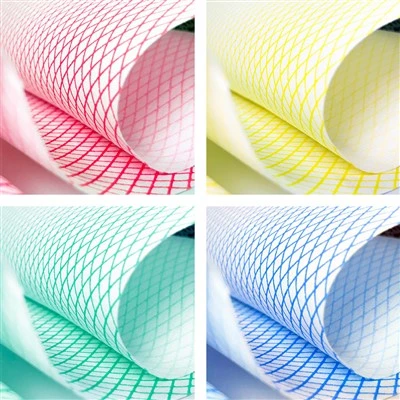
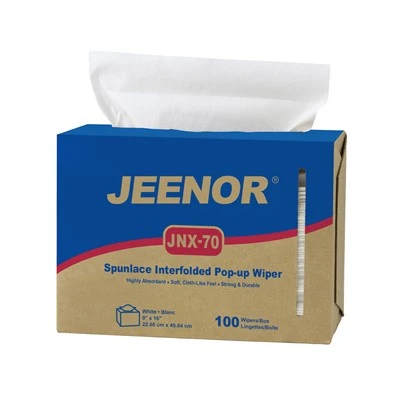
In household waterproofing construction, a beautiful large object—non-woven fabric is often used.
Why use non-woven fabrics? What is the non-woven fabric used for? Today, the editor will take everyone to get to know this seemingly irrelevant thing again.
Non-woven fabric refers to non-woven fabric, or non-woven fabric. It is a fabric that does not need to be spun and weaves, but the short fibers or filaments are oriented or probabilistically arranged to form a web structure, which is then reinforced by mechanical, thermal bonding or chemical methods. Hence. It has the characteristics of moisture-proof, breathable, flexible, light weight, non-combustible, difficult to decompose, non-toxic and non-irritating, diverse colors, low price, and recyclable.
What is the role of non-woven fabrics?
With its own moisture-proof, breathable, and flexible properties, non-woven fabrics can be closely combined with waterproof coatings. In addition, the more and more critical role of non-woven fabrics for waterproofing is to strengthen and resist tensile cracking.
How to resist tensile cracking? To give a very intuitive example, when we are decorating, if there are small cracks on the wall, the painter will tell us: we can solve it by hanging a net. This net is a fiberglass mesh cloth to resist the shrinkage of concrete and putty. The pull that it brings.
Similarly, the non-woven fabric used in the waterproof construction process is also used as a reinforcement to strengthen the tensile performance of the paint coating, so that the waterproof coating forms a whole, and thus never leaks.
Why does concrete crack
The basic role of non-woven fabrics in waterproof construction has been clarified. With the spirit of breaking the bottom of the casserole, let's talk about why concrete cracks again.
Where did the crack come from? We know that when building a house. In order to prevent the concrete from cracking, steel bars should be added to resist the strong tension caused by the concrete shrinking process. However, steel bars can never completely offset the tensile force caused by concrete, so it will still crack (concrete cracking is a very stable phenomenon. Since concrete works with cracks, there are many reasons for concrete cracking, so I won't repeat them here. ).
Concrete will crack, so there are many large holes under the concrete, and water will leak along these holes and cracks. Therefore, there is a saying that "water is all-permeable".
In order to make the waterproof coating more and more resistant to water intrusion, smart waterproof people invented the waterproof coating. Therefore, to better play the tensile and crack resistance of the waterproof coating, non-woven fabrics are also added. strengthen. Therefore, we have commonly used "one cloth and three coatings", "two cloths and five coatings" and other technological methods.