The most notable feature of superfine fiber is that its monofilament linear density is much lower than that of conventional ordinary fiber, and the thinnest can reach 0.0001 dtex. Due to this remarkable feature of superfine fiber, it has many properties different from ordinary fiber, mainly in the following aspects:
(1) The hand feels soft and delicate and has good flexibility
The cross-section diameter of the monofilament of the superfine fiber and the fineness of the monofilament are both smaller than that of the natural fiber, so its crimp modulus is lower, so the fabric feels soft and has better performance; its monofilament has low bending stiffness, so its fabric has Good drape performance; Compared with ordinary fibers, the crystallinity and orientation of ultrafine fibers are higher, which improves the relative strength of the fibers. Therefore, the bending strength and repeated bending strength of the fibers are improved, making them more flexible and smooth. And it feels soft. However, these properties are also related to its fabric structure, blended fiber components, blended fiber ratio, etc. At the same time, for textured yarns, the drop in monofilament fineness will lead to poor bulkiness.
(2) Good wrinkle resistance and abrasion resistance
The decrease in the fineness of superfine fibers reduces the absolute strength. However, for the same yarn number, the number of fibers in the yarn section is more than that of conventional yarns, so the yarn strength is still relatively high; at the same time, it is beneficial to sanding the fabric. Washing or raising treatment, so as to prepare higher-grade fabrics such as velvet, suede and peach skin, and has better wrinkle resistance and abrasion resistance.
(3) Good fluffy and soft luster
The microfiber has small fineness and high fiber density, which increases the specific surface area and capillary effect of the fiber. While improving the coverage and bulkiness of the fabric, the reflection of light is also more dispersed, so that the reflected light inside the fiber is more distributed. It is delicate, so the luster is soft, giving it a silk-like luster.
(4) High-density fabric structure and high cleaning ability
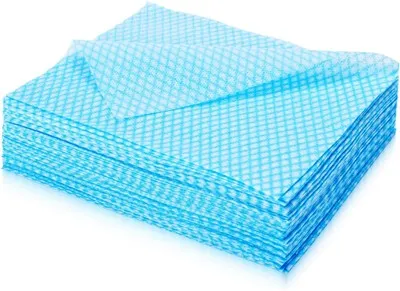
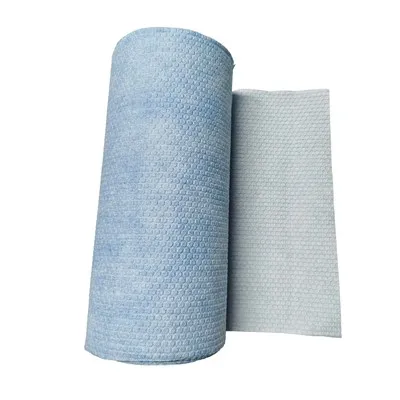
Superfine fibers are thin, and the warp and weft yarns are easy to adhere to each other and squeeze deformation during weaving, so that it is easy to form a high-density fabric. The warp and weft density is several times that of ordinary fabrics. After finishing, even without any coating, etc. The treatment can also prepare waterproof fabrics, which can be used in raincoats, windbreakers, casual wear, sportswear, dust-free clothing, fashion and footwear fabrics, etc. Similarly, due to its small monofilament density, when wiping objects with its woven fabric, the thin fibers are like sharp scrapers, which makes it easy to scrape off the dirt. At the same time, the contact surface between the ultrafine fibers and the dirt is larger. Therefore, it is easier to stick tightly and has a strong capillary wicking effect, so that it is easy to absorb the attached dirt into the fabric, and to avoid the re-contamination of the object due to the loss of the dirt. Therefore, it has high cleaning ability and is an ideal wiping cloth. First choice with clean cloth.
(5) Good warmth retention
The fineness of superfine fiber is small, and there is more still air in the fiber assembly, so superfine fiber is a better thermal insulation material. If some thicker fibers are mixed into the fiber assembly as a scaffold, the compression elasticity and bulkiness can be greatly increased.
(6) Higher water absorption and oil absorption
The fineness of the superfine fiber becomes thinner and the specific surface area becomes larger, thereby forming a smaller scale and a larger number of capillary holes, which not only greatly improves the moisture absorption of the fabric, but also greatly improves its capillary wicking capacity. Can absorb and store more liquid (oil or water). Therefore, microfibers can be used in the development of super absorbent products, such as super absorbent pen cores, super absorbent towels and other products. These voids can absorb a large amount of water, so the ultrafine fiber has strong water absorption, and most of the absorbed water is stored in the voids, which can be dried quickly, thereby effectively preventing the growth of bacteria.
(7) A good carrier for biological enzymes and ion exchange
Because of the large specific surface area of superfine fibers. Therefore, it is a good carrier for active agents such as biological enzymes and ion exchangers, which can improve its activity efficiency, and can also be used in permeable membranes, biomedicine (such as artificial skin, artificial blood vessels) and other fields.
In addition, the superfine fiber also has anti-microbial adhesion and anti-corrosion of shellfish and seaweed. However, there are also certain problems in the processing and use of superfine fibers. Such as: high friction coefficient, low monofilament strength, and reduced bending stiffness, which reduces the stiffness and bulkiness of the fabric prepared; the large specific surface area makes it difficult to desizing, high slurry absorption, and large dye consumption during processing. Dyeing is easy to be uneven and other problems. Therefore, it is necessary to appropriately adjust the dyeing and finishing equipment and related process conditions during the processing and preparation process.