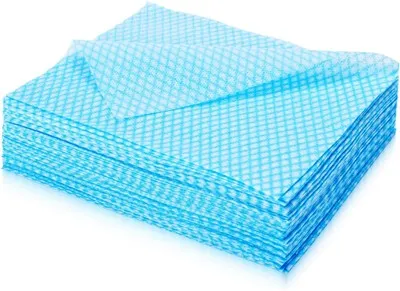
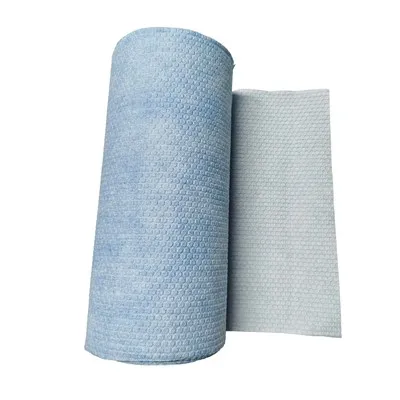
Advantages of non-woven fabrics:
1. Lightweight: Polypropylene resin is used as the main raw material for production, with a specific gravity of only 0.9, which is only three-fifths of cotton. It is fluffy and feels good.
2. Soft: It is composed of fine fibers (2-3D) and is formed by hot-melt bonding with light spots. The finished product is moderately soft and comfortable.
3. Water-repellent and breathable: Polypropylene slices do not absorb water, have zero moisture content, and have good water-repellent properties. They are made of 100% fiber and are porous and air-permeable. It is easy to keep the cloth dry and easy to wash.
4. Non-toxic and non-irritating: The product is produced with FDA food-grade raw materials, does not contain other chemical components, has stable performance, is non-toxic, non-odor, and does not irritate the skin.
5. Antibacterial and anti-chemical agents: Polypropylene is a chemically blunt substance, not moth-eaten, and can isolate the corrosion of bacteria and insects in the liquid; antibacterial, alkali corrosion, and the strength of the finished product will not be affected by erosion.
6. Antibacterial. The product is water-repellent, not moldy, and can isolate the bacteria and insects in the liquid from erosion, and is not moldy.
7. Good physical properties. It is made of polypropylene spun yarn and directly spread into a net and thermally bonded. The strength of the product is better than that of ordinary staple fiber products. The strength is non-directional, and the strength is similar in the vertical and horizontal directions.
Disadvantages of non-woven fabrics:
1. Compared with woven fabric, the strength and durability are poor.
2. It cannot be cleaned like other fabrics.
3. The fibers are arranged in a certain direction, so it is easy to split from the right angle direction and so on. Therefore, the improvement of the production method mainly focuses on the improvement of preventing splitting.