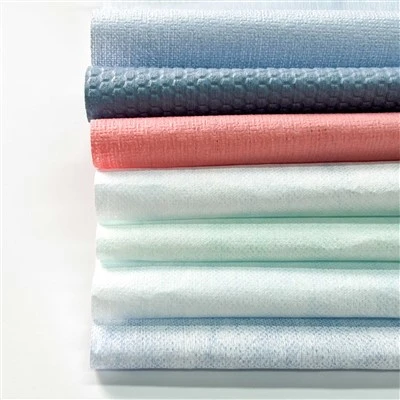
Non-woven fabric is a relatively common material in the structure of masks. It is mainly composed of oriented or random fibers. It is also called cloth because of its appearance. So how much do you know about non-woven materials? I believe you may have overlooked it. Today, I will briefly introduce the relevant knowledge about non-woven fabrics in masks!
1. Divided according to the production process:
a. Spunlace non-woven fabric. This material mainly sprays a high-pressure fine water stream onto one or more layers of fiber webs, so that the fibers are entangled with each other, and the fiber web is stronger.
b. Heat-sealing non-woven fabric. This material mainly refers to adding a powdery hot-melt adhesive reinforcement material to the fiber web, and the fiber web is heated and melted and then cooled and consolidated into a cloth.
c. Pulp air-laid non-woven fabric. This material mainly refers to the use of air-laid technology to open the wood pulp fiberboard into a single fiber state, and then use the air-flow method to make the fibers agglomerate on the web curtain, and then strengthen the fiber web into a cloth.
d. Spunbond non-woven fabric. This material is formed after the polymer has been extruded and stretched to form continuous filaments, the filaments are laid into a net, and the fiber net is then bonded by itself, chemically bonded, and mechanically reinforced, so that the fiber net becomes non-woven. Spinning cloth.
e. Meltblown non-woven fabric. The process of meltblown non-woven fabrics: polymer feeding, melt extrusion, fiber formation, fiber cooling, netting, and reinforcement into cloth.
2. What are the characteristics of non-woven fabrics:
Because the non-woven fabric has no warp and weft threads, it is very convenient to cut and sew, and it is easier to shape. The non-woven fabric breaks through the traditional textile principle, and has the outstanding characteristics of short process flow, fast production rate and low cost.
3. What are the basic applications of non-woven fabrics:
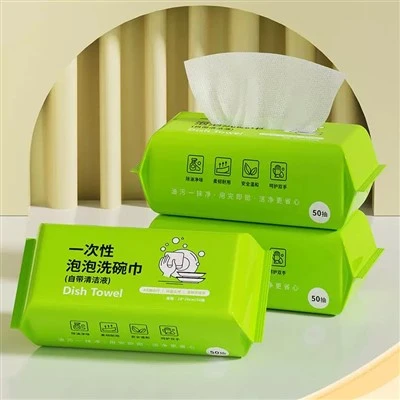
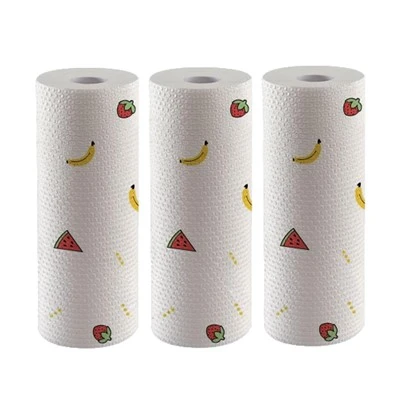
Non-woven fabrics are widely used in various fields, such as surgical gowns, surgical drapes, masks, medical dressing materials, cotton pads, wet wipes, medical gauze, medical curtains, etc.