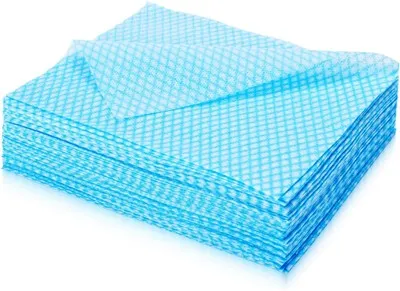
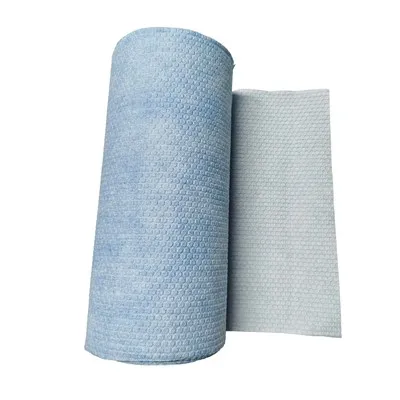
The non-woven fabric has the characteristics of moisture-proof, breathable, flexible, light weight, non-combustible, easy to decompose, non-toxic and non-irritating, rich in color, low in price, and recyclable. For example, polypropylene (pp material) pellets are used as raw materials, which are produced by high-temperature melting, spinning, paving, and hot-rolling and continuous one-step process.
Non-woven fabric is not cloth
Domestic non-woven fabrics are almost made of rayon fibers such as polypropylene. In other words, domestic non-woven fabrics may be plastic products. As a result, the non-woven fabric is 100% degradable, recyclable, non-toxic and environmentally friendly, and remains to be seen.
Regarding the non-woven fabric production process, it is described that the spray machine spits out a "cloth" that does not see the latitude and longitude lines, mostly white, and the individual is black. After extrusion molding, it is cut according to the specifications of 1 meter or 1 meter. Well, they are unprocessed non-woven bag blanks, the whole process is similar to the pancakes, but the raw materials are not flour and eggs, but other synthetic fibers such as polypropylene, viscose, etc., that is, it and washing machine, TV The materials used in some appliance housings are the same, also plastic.
The only difference is that the polypropylene pellets used to make the non-woven fabric are mostly used. The past life of a non-woven bag in the store may be the casing of a laptop, monitor or washing machine.
Its life is based on polypropylene, a variety of man-made fibers, after melting, hot pressing and other steps, a plastic sprayed from the spray machine, the fibers are oriented or randomly distributed, without combing, can not see on them The warp and weft yarns are crossed after the weaving, so the non-woven fabric is called “non-woven fabric” and more accurate.
The biggest weakness of “pancakes” is “not strong”. Spray machines, extruders and various rate meters strictly control the temperature, speed and thickness of man-made fibers. The thickness of non-woven fabrics is generally divided by grams. The number of grams used as green shopping bags in the market is generally between 30 grams and 100 grams.
"The catalyst is indispensable, there are various catalysts, aluminum-containing, etc." in order to make the molecular weight of the polypropylene fiber as small as possible. The molecular weight is small, the performance is unstable, and it will decompose when exposed to light or water.
Relatively degradable
When the ‘plastic limit order’ was just issued, the business was on fire. Since then, more and more people have been doing. I have not expected that market demand will become smaller and smaller, and profits will plummet. The non-woven fabric factories in Guangdong and Zhejiang face the same dilemma. Some people predicted the foam of non-woven fabrics. "There is nothing to replace plastic bags. The degradability of non-woven fabrics is relative to plastic bags."
Two to three hundred years and 90 days is the difference between the degradation years of plastic bags and non-woven fabrics. For hundreds of years, the non-woven fabrics are wearing "degradable plastic bags" and "green" hats. However, the non-woven fabric can degrade itself 90 days outside, but it does not degrade to no shadow, but becomes a piece or powder that is crunchy like an egg roll. If it is placed indoors, the entire degradation process takes 9 years.
Whether it is 9 years or 90 days, you need a condition - the sun, the weak is not enough, it is the glare. “We did the experiment and hung the non-woven fabric under the big sun, and it was finished in a summer.” “Completed” means that the non-woven fabric is completely degraded. If there is no sunlight, stay indoors and it will take at least a decade or even decades to degrade. Don't forget, the degraded dust also contains colored inks. These pigments make the non-woven fabrics colorful, and also become toxic substances in the dust after degradation. If they are sucked, they are harmful to the human body.
Non-woven fabric is still "trouble cloth"
Recyclable and easy to degrade, they have been a place where non-woven fabrics are worthy of praise. However, like degradation, the non-woven fabric can be recycled. Non-woven fabrics can't be machine washed. After vigorous simmering, it can't be recycled two or three times. It can only be hand-washed, but the treatment of cashmere and silk is obviously not available. Most people who use non-woven fabrics discard them after they are stained with oil. Therefore, the recyclability of non-woven fabrics is actually only a short promise to the environment.
The properties of the nonwoven also include water permeable and breathable. Due to these two characteristics, the nonwoven fabric can contain a limited number of items. At the same time, since polypropylene can release toxic substances when exposed to high temperatures, cooked foods cannot be directly contacted with non-woven fabrics, and can only be placed in food-specific bags made of polyethylene. The load-bearing capacity and strength of non-woven fabrics are not as good as those of plastic bags. "If plastic bags are made as thick as non-woven fabrics, plastic bags should be stronger than non-woven fabrics," said the industry insiders.
There are not many opportunities for non-woven fabrics to be recycled. There are an average of 10 unused non-woven bags in each household. If these 10 non-woven bags are to be recycled, they should always pay attention to moisture and sunlight. There are so many conditions to limit, so that the name of the non-woven bag - environmental protection bag, some names do not match. It is no wonder that 30% of non-woven factories in China have closed down, and 60% of the warehouses in the factory warehouse are unsalable.
Of course, the most important thing is the cost, which is an obstacle that the non-woven fabric can't overcome. Merchants in the traditional farmer's market prefer plastic bags. Since they are all plastic, businesses will certainly not choose non-woven bags that are 10 times more expensive than plastic bags. In the final analysis, the cost issue has made the non-woven fabric industry a turning point in the sun.