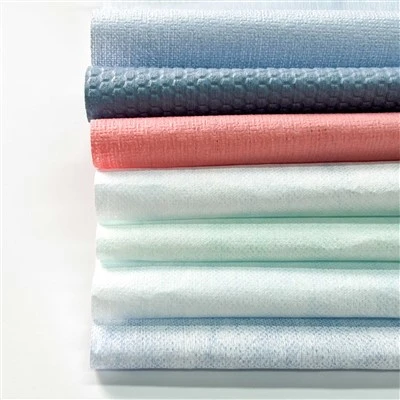
In the domestic disinfection supply center, besides cotton cloth, the most commonly used packaging materials are non-woven fabrics. When choosing non-woven fabrics, hospitals often pay attention to the thickness (ie weight), so is the thicker non-woven fabrics the better?
the answer is negative.
The increase in the thickness of the non-woven fabric means an increase in the weight per unit area, and the corresponding strength will increase, but due to its own structural characteristics, the increase in thickness does not mean an increase in the barrier properties of microorganisms. For example, when a thick non-woven fabric is used, the increase in the weight of the spunbond layer cannot effectively increase its anti-bacterial performance. Only when the pore size of the key filter layer (ie the melt blown layer) can effectively filter the intrusion of microorganisms and dust, its resistance Bacterial performance meets the requirements. As the thickness increases, the air permeability of the packaging material will also be affected, and the probability of wet packs will increase.
In clinical use, the non-woven fabric will be damaged after sterilization. For such damage, the main reason is that the microscopic fine plastic fibers of the non-woven fabric will shrink to a certain extent after high temperature sterilization. The performance is after sterilization in use. The non-woven fabric is more brittle than before sterilization, so applying too much force or unreasonable picking and placing method to it during use will cause destructive damage to the packaging material. In addition, use burrs and sharper instruments on the edges. It will also cause damage to the non-woven fabric. Under this circumstance, it is recommended that the clinical packing should be tight enough, handled with care, and use the double-layer packing recommended by the specification, which will greatly reduce the probability of damage. If the problem of damage is only solved by increasing the thickness of the non-woven fabric, in addition to ensuring the anti-bacterial performance, it is also necessary to closely observe the probability of wet packs.