1. Polypropylene fiber
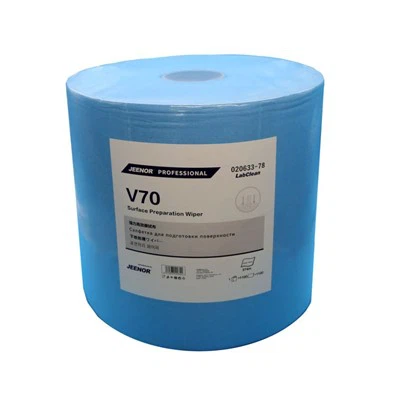
It is made by melt-spinning polypropylene, also known as polypropylene, abbreviated as PP. It has a wide range of uses, such as geosynthetic materials, carpets, surgical gowns, surgical drapes, covering materials for baby diapers and women’s sanitary napkins, oil-absorbing materials, filtering materials, warming materials, sound insulation materials, wipers, etc.
2. Polyester fiber
The chemical name is polyethylene terephthalate, also known as polyester, abbreviated as PET or PES. Common cross-sections in non-woven fabrics are round, triangular, flat ribbon, hollow round, etc., which are usually used for insulating materials, thermal flakes, wall coverings, clothing lining base fabrics, roof waterproof materials, and geosynthetics.
Three, polyamide fiber
Usually made by melt spinning of polyamide 6, also known as nylon fiber, abbreviated as PA. Mainly used for clothing lining base cloth, papermaking blankets, carpets, synthetic leather base cloths, polishing materials, etc.
Four, polyvinyl alcohol fiber
The polyvinyl formal fiber obtained by wet spinning is also called vinylon. It can be mixed with polypropylene fiber to produce geosynthetics, and water-soluble fiber can be used for embroidery base cloth, disposable materials, etc.
Five, polyacrylonitrile fiber
Copolymerized by acrylonitrile and other monomers, wet spinning or dry spinning forming. Mainly used in the production of warm flakes, artificial fur, blankets, etc.
Six, cotton fiber
Cotton fiber contains more impurities. After removing impurities and bleaching, it can be used for medical and health non-woven fabrics. The whiteness should be greater than 80%, and the residual sulfur content should be less than 8mg/100g.
Seven, viscose fiber
It is composed of cellulose and is formed by wet spinning, abbreviated as VIS. Viscose fiber has developed many new varieties, such as high crimp, high wet strength, high moisture absorption, etc. It is often used in medical and health materials, and mixed with other fibers for clothing lining base cloth, synthetic leather base cloth, food filter material, etc.
8. Hemp fiber
Ramie fiber is mainly used in the production of carpet base cloth, polishing materials, linings and sound insulation and heat insulation materials for construction.
Nine, wool fiber
It has natural curl, good elasticity, full hand feeling, good warmth retention, strong moisture absorption, soft luster, good dyeability, unique milling, but high price. Mainly used in the production of high-grade carpets, papermaking blankets, etc.
10. Lyocell fiber
A new type of cellulose fiber produced by the solvent method. The cellulose is directly dissolved in an organic solvent, filtered, defoamed and then extruded and spun, and coagulated to become a cellulose fiber with a complete circular cross-section and smoothness. The surface structure has a high degree of polymerization. Lyocell fiber not only has the advantages of cellulose, such as moisture absorption, antistatic property and dyeability, but also has the strength and toughness of ordinary synthetic fiber. Its dry strength reaches 4.2cN/dtex, which is similar to ordinary polyester fiber, and its wet strength is only about 15% lower than the dry strength and still maintains high strength. The fiber does not pollute the environment during production, and is biodegradable by itself, so it can be called "green fiber".
11. Coir Fiber
The length is 15~33cm, the diameter is 0.05~0.3mm, the rigidity is good, and the elasticity is good. It can be processed into padding for sofas, car seat cushions, spring cushions, thick mattresses, and sports mats using acupuncture technology.
12. Silk
It has the advantages of good elongation, elasticity and hygroscopicity, fineness, softness, smoothness and good gloss. In the non-woven fabric industry, only its silk scraps are used to produce some special wet-laid and spunlace non-woven materials.
13. Waste fiber
Including the top rollers, roving heads, carded cotton cut, combed noil, short pile, noil and combed short wool from the wool spinning mill, ramie noil from the hemp spinning mill, and waste silk from the chemical fiber mill. Spinning fibers, etc., also include waste fibers formed by cloth blooming processing of clothing trimmings and old clothes. Waste fiber is mainly used in products such as fillers, packaging materials, sound and heat insulation materials, and padding.
Special fibers in non-woven fabrics
1. Soluble bonding fiber
The soluble bonding fiber will soften and melt in hot water or steam, and after drying, it will bond the fibers in the fiber web. This type of fiber is usually copolymerized by a variety of polymers. For example, the Efpakal L90 fiber developed in Japan is a copolymer of 50% polyvinyl chloride and 50% polyvinyl alcohol. Polyvinyl alcohol is partially dissolved in hot water at 90°C, while polyvinyl chloride Partially softened and bonded. The N40 fiber made by Enka in Germany is a copolyamide, which can be melted in superheated steam or dry hot air at 190°C.
2. Hot melt adhesive fiber
The synthetic fibers made by melt spinning can be used as hot-melt bonding fibers for the production of thermal bonding non-woven materials. However, some fibers have high melting points, high energy consumption in production, and large heat shrinkage, which are not suitable for hot-melt bonding fibers. As a result, some low-melting hot-melt bonding fibers have been developed at home and abroad.
Requirements for low-melting hot-melt bonding fibers:
(1) Low melting point
(2) Large softening temperature range
(3) Small thermal shrinkage
Three, two-component fiber
Bi-component fiber is also called composite fiber, which uses two kinds of polymers to be formed through composite spinning holes at the same time. There are 4 common structural forms:
(1) Side by side
(2) Core-shell type (mantle/core)
(3) Discontinuous fiber core-shell type (short fibres in a matrix)
(4) Filament core shell type (fibres of unlimited length)
The two-component fibers used in the non-woven fabric process include ES fibers, sea-island fibers and orange petal fibers. ES fiber is a hot-melt bonding fiber with excellent performance. It is used as both the main fiber and the bonding fiber in the web. It was developed by Chisso Corporation of Japan and has been produced in China. Sea-island type fiber and orange petal type fiber are chemically or
Mechanical methods can form ultra-fine fibers.
Fourth, superfine fiber
Superfine fibers generally refer to fibers with a fiber fineness of 0.44dtex (0.4d) or less. The main production methods of microfiber include:
The composite spinning technology is used to first prepare two-component composite fibers, usually sea-island fibers and orange petal fibers, and then separate the two components to form ultra-fine fibers.
(1) For the island-in-the-sea fiber, use the dissolution method to dissolve the "sea" component, and the remaining "island" component is the ultrafine fiber, and the fineness can reach: 0.0011~0.11dtex (0.001~0.1d).
(2) For orange petal fibers, mechanical methods can be used to separate the two components. After separation, the two components are ultra-fine fibers, and the fineness can reach: 0.11~0.44dtex (0.1~0.4d)
Sea-island type fiber Alkali reduction treatment sea-island type fiber Orange petal type fiber Mechanical splitting of orange petal type fiber Alkaline reduction treatment of orange petal type fiber
Five, high-performance fiber
Special fibers with high performance, such as carbon fiber, aramid, etc.
(1) Aramid 1313, trade name Nomex, strength 4.84cN/dtex, modulus 132cN/dtex, elongation at break 17%, maximum service temperature 204℃.
(2) Aramid 1414, trade name Kevlar, strength 19.36cN/dtex, modulus 440cN/dtex, elongation at break 4%, maximum service temperature 232℃.
(3) Polybenzimidazole fiber, trade name PBI, strength 4.27cN/dtex, modulus 137cN/dtex, elongation at break 10%, maximum service temperature 560℃.
(4) Polysulfone amide fiber, trade name aramid, strength 3.8cN/dtex, modulus 54cN/dtex, elongation at break 17%, maximum use temperature 200℃.
(5) PTFE fiber, trade name fluorine fiber, strength 1.75cN/dtex, modulus 13.2cN/dtex, elongation at break 25%, maximum service temperature 280℃.
(6) Carbon fiber (PAN), the strength is 1961~7061N/mm2, the modulus is 226~686kN/mm2, the elongation at break is 25%, and the melting point or decomposition point is 2000~3500 ℃.
Six, functional fiber
The difference from high-performance fibers is that high-performance fibers emphasize high temperature resistance, thermal stability, and high strength, while functional fibers emphasize use functions, such as:
(1) Conductive
(2) UV resistance
(3) Antibacterial
(4) Deodorization
(5) Absorb solar energy
With antibacterial properties No antibacterial properties
Seven, inorganic fiber
(1) Glass fiber
The circular cross-section, the maximum diameter is 18μm, and the practical application is mainly 8-12μm, which is equivalent to 1.2~2.8dtex. When producing ultra-fine filter materials, glass fibers of 1 to 3 μm can be used.
The surface of glass fiber is smooth, rigid, easy to break, and debris can cause skin allergies, so pay attention to production and labor protection. Glass fiber non-woven fabric materials are often used in filter materials, sound insulation materials, thermal insulation materials, and composite materials.
Comparison of fiber fineness:
(2) Ceramic fiber
The silicate fiber is characterized by high strength, excellent heat resistance, chemical resistance, softness, and spinnability.
At present, there are mainly two types of ceramic fibers commercially produced: silicon carbide (SiC) and Si-Ti-C-O. It is difficult for ceramic fibers to be carded into a web, and it is usually reinforced by wet-laid web + needle punching or spunlace.
(3) Metal fiber
It is stretched from metal rods, and the production cost is extremely high. The diameter of commonly used carbon steel fibers is 75-250μm. The non-woven fabric material made of stainless steel fiber can be used as a high temperature resistant filter material. A small amount of metal fiber (0.5 to 1.0% of the total fiber weight) is mixed into the fiber web to obtain a permanent antistatic effect.
8. Wood pulp fiber
Wood pulp fiber is a natural cellulose fiber derived from wood. In the early 1970s, the United States first used fluff pulp short fibers in wood pulp fibers to manufacture disposable sanitary products (women's sanitary napkins, baby diapers). Because of their good hygroscopicity and low cost, the output rose sharply. Dry papermaking and spunlace non-woven technology have developed rapidly in recent years, and a large number of wood pulp fibers have also been used. The raw material of wood pulp fiber is log, which contains 43-45% cellulose, 27-30% hemicellulose, 20-28% lignin and 3-5% natural extractables.
Nine, crimped hollow fiber
Chemical fibers with tubular cavities in the axial direction are called hollow fibers. According to the curl characteristics, it is divided into two-dimensional curl and three-dimensional curl. According to the number of components, it is divided into single hollow fibers, such as polyester hollow fibers and bi-component composite hollow fibers, such as polyester/propylene composite hollow fibers. According to the number of holes, it is divided into single-hole and porous fibers, such as 4-hole, 6-hole and 9-hole hollow fibers. The greater the hollowness of the hollow fiber, the greater the amount of air retained in the material, which makes the non-woven product lighter and more warm. The most commonly used is polyester three-dimensional crimped hollow fiber, which has the advantages of good elasticity, fluffy, warmth, and air permeability. It is the main raw material for sprayed cotton, silk-like surface, and down-like thermal floss.
10. Polylactic acid fiber (PLA)
Polylactic acid fiber is a kind of using corn as raw material, extracting starch from it, enzymatically decomposing it to obtain glucose, then fermenting by lactic acid bacteria to turn into lactic acid, then chemically synthesizing it to obtain high-purity polylactic acid, and then producing it by melt spinning and other processing technologies The fibers can be made into a non-woven fabric material by dry or wet method, and it can also be directly made into a non-woven fabric material by the spunbonding method or the meltblown method.