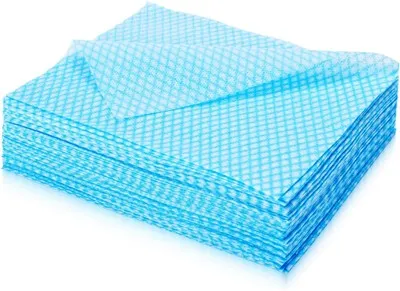
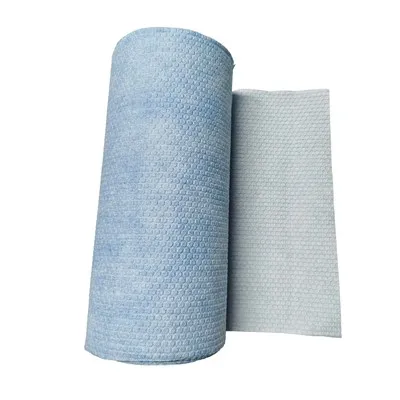
Briefly introduce the use of several non-woven fabrics? Non-woven fabric, also known as non-woven fabric, is composed of directional or random fibers. It is a new generation of environmentally friendly materials. Low cost, recyclable and so on. For example, more polypropylene (pp material) pellets are used as raw materials, which are produced by continuous high-temperature melting, spinning, spreading, and hot-pressing coiling. It is called cloth because of its appearance and certain properties.
Non-woven fabrics can be divided into:
1. Spunlaced non-woven fabric: It sprays high-pressure micro-water flow on one or more layers of fiber webs to entangle the fibers with each other, thereby strengthening and strengthening the web.
2. Heat-sealed non-woven fabric: It refers to adding fibrous or powdery hot-melt bonding and reinforcing materials to the web, and the web is then heated and melted to cool and strengthen the fabric.
3. Pulp air-laid non-woven fabric: It can also be called dust-free paper and dry-process paper-making non-woven fabric. It uses air-laying technology to open the wood pulp fiberboard into a single fiber state, and then uses the air-flow method to agglomerate the fibers on the screen curtain, and the fiber web is then consolidated into a cloth.
4. Wet-laid non-woven fabric: The fiber raw material placed in the aqueous medium is opened into single fibers, and different fiber raw materials are mixed to make a fiber suspension slurry, which is transported to the web forming mechanism, and the fibers are in a wet state. Reinforce it into a cloth.
5. Spunbond non-woven fabric: After the polymer has been extruded and stretched to form continuous filaments, the filaments are laid into a web, and the web is then self-bonded, thermally bonded, chemically bonded, or mechanically strengthened Method to make the web into a non-woven fabric.
6. Meltblown non-woven fabric: its process: polymer feeding --- melt extrusion --- fiber formation --- fiber cooling --- forming into a network --- strengthening into a cloth.
7. Needle-punched non-woven fabric: It is a kind of dry-laid non-woven fabric. Needle-punched non-woven fabric is used to reinforce the fluffy web into a cloth by using the puncture effect of the needle.
8. Stitch-knitted non-woven fabric: It is a kind of dry-process non-woven fabric. The stitch-knitting method uses warp-knitted coil structure to make webs, yarn layers, non-woven materials (such as plastic sheet, plastic thin metal foil, etc.) or Their combination is reinforced to make a non-woven fabric.
Briefly introduce the use of several non-woven fabrics? The uses of non-woven fabrics can be roughly divided into:
(1) Non-woven fabrics for medical and sanitary purposes: surgical gowns, protective clothing, disinfection cloths, masks, diapers, civilian wipes, wipes, wet towels, magic towels, soft rolls, beauty products, sanitary napkins, sanitary care Pads and disposable sanitary cloths;
(2) Non-woven fabrics for home decoration: wall stickers, tablecloths, sheets, bedspreads, etc .;
(3) Non-woven fabrics for clothing: linings, adhesive linings, flakes, styling cotton, various synthetic leather base fabrics, etc .;
(4) Industrial non-woven fabrics; filter materials, insulation materials, cement packaging bags, geotextiles, covering cloths, etc .;
(5) Agricultural non-woven fabrics: crop protection cloths, seedling cloths, irrigation cloths, insulation curtains, etc .;
(6) Other non-woven fabrics: space cotton, thermal insulation materials, linoleum, smoke filters, tea bags, etc.