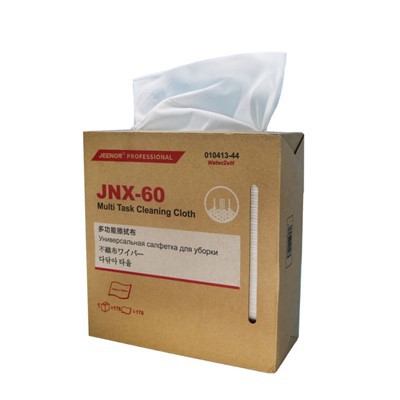
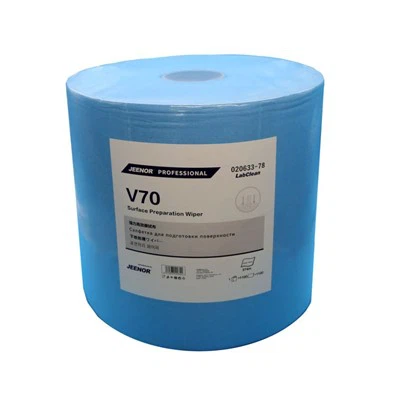
Cotton spunlace non-woven fabrics (pure cotton spunlace non-woven fabrics) are widely used, mainly in:
①Medical and health supplies: disposable surgical dressings, sterile wipes, wound dressings, soluble hemostatic gauze, medicinal plasters, hemostatic wound healing dressings, bandages, gauze balls, absorbent pads, gauze sheets, surgical towels, surgical gowns, surgery Caps, surgical curtains, isolation gowns, bed supplies, masks, face masks, nasal masks, trauma care, etc., as well as new polymer medical hygiene materials such as super filtration, nano filtration, reverse osmosis filtration, artificial human organs, and surgical sutures;
②Dry and wet wipes, including disposable wet products, catering wipes, wet cosmetics products, disinfection medical wipes, screen wipes, household wipes, baby wipes, car wipes, suitable for house cleaning and printing Various wipe cloths used in industries such as paint industry, paint industry, etc.;
③Household hygiene products, including cotton pads, facial masks, sanitary napkins, pads, baby and adult diapers, health underwear, deodorant socks, environmental protection bags, tablecloths, disposable toiletries, travel hygiene products, etc.;
④The spunlace cloth with flame-retardant, antibacterial, water-repellent, anti-static and water-soluble functional spunlace cloth can penetrate into medical protective clothing, military chemical protective clothing, electronics, filtration, packaging and other fields, and play a role in waterproof and moisture permeability, bacterial isolation , Biochemical filtration and other functions;
⑤ Synthetic leather base cloth, coated base cloth, household decoration, clothing accessories, etc.
⑥Personal care products such as cotton face towels, napkins, soft towel rolls, pure cotton soft towels, etc.
There are mainly the following categories of non-woven technology:
① Spunlace non-woven fabric technology
The spunlace process is to spray a high-pressure fine water stream onto one or more layers of fiber webs, so that the fibers are entangled with each other, so that the fiber webs can be reinforced and have a certain strength.
② Heat-sealing non-woven fabric technology
Thermal bonding non-woven fabric refers to adding fibrous or powdery hot-melt bonding reinforcement material to the fiber web, and then the fiber web is heated, melted and cooled to be consolidated into a cloth.
③ Pulp air-laid non-woven fabric technology
Airlaid non-woven fabrics can also be called dust-free paper and dry-laid non-woven fabrics. It uses air-laid technology to open the wood pulp fiberboard into a single fiber state, and then uses air-flow method to agglomerate the fibers on the web curtain, and then reinforce the fiber web into a cloth.
④Wet-laid non-woven fabric technology
The wet-laid non-woven fabric is to open the fiber raw materials placed in the water medium into single fibers, and at the same time, the different fiber raw materials are mixed to form a fiber suspension slurry. The suspension slurry is transported to the web forming mechanism, and the fibers are formed into a web in a wet state. Reinforce into cloth.
⑤ Spunbond non-woven fabric technology
Spunbond non-woven fabrics are formed after the polymer has been extruded and stretched to form continuous filaments. The filaments are laid into a web, and the web is then bonded through self-bonding, thermal bonding, chemical bonding or mechanical reinforcement. The web becomes a non-woven fabric.
⑥Meltblown non-woven fabric technology
The process of meltblown non-woven fabric: polymer feeding --- melt extrusion --- fiber formation --- fiber cooling --- forming a net --- strengthening into cloth.
⑦Needle punched non-woven fabric technology
Needle-punched non-woven fabrics are a kind of dry-laid non-woven fabrics. Needle-punched non-woven fabrics use the puncture effect of needles to reinforce the fluffy web into a cloth.
⑧Stitching non-woven fabric technology
Stitched non-woven fabric is a kind of dry-laid non-woven fabric. The stitching method uses the warp-knitted loop structure to align fiber webs, yarn layers, non-woven materials (such as plastic sheets, plastic thin metal foils, etc.) or a combination of them. The body is reinforced to make a non-woven fabric.